
Mục lục
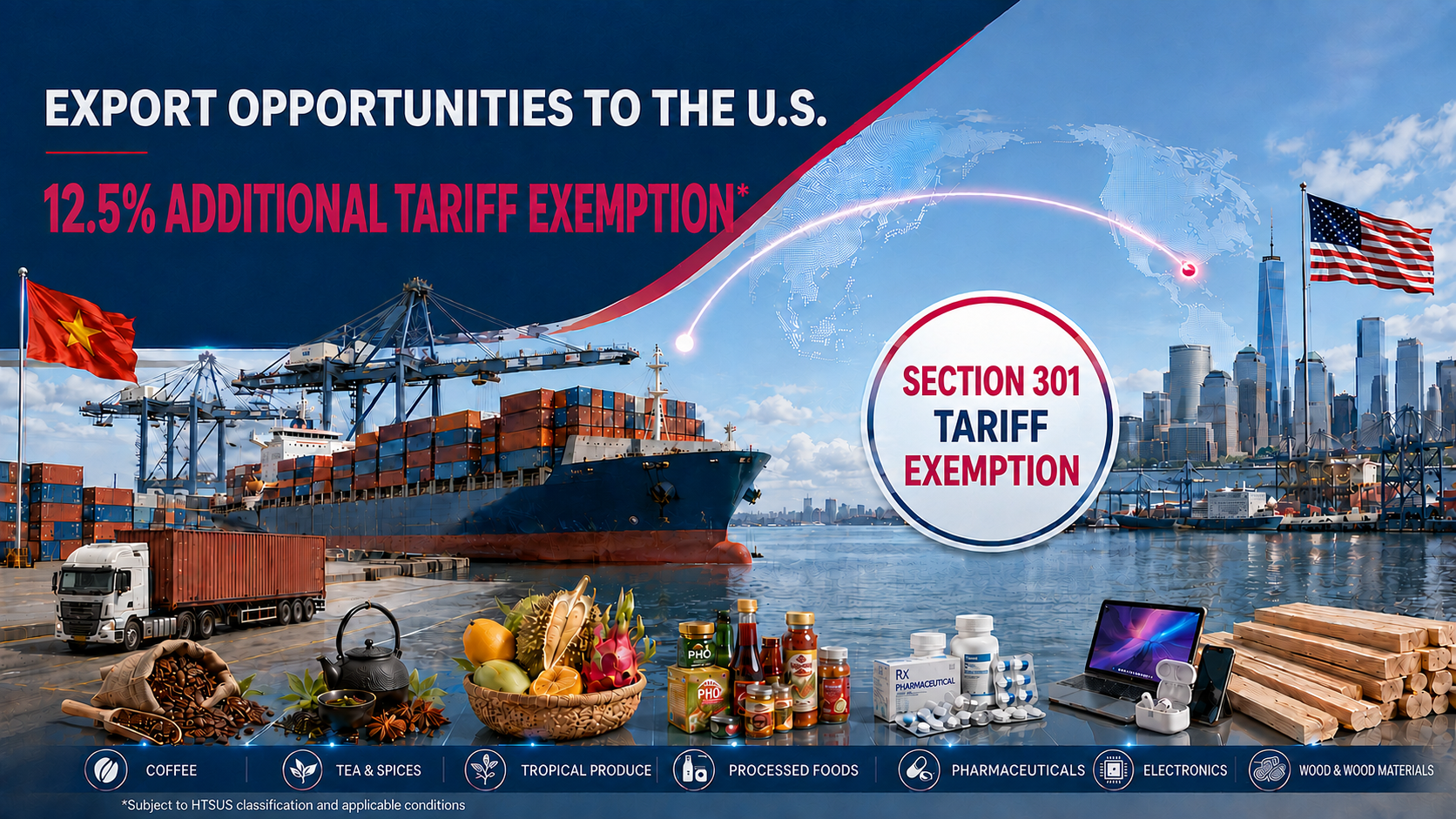
According to a recent announcement from the Office of the United States Trade Representative (USTR), the United States will apply an additional 12.5% tariff under Section 301 on goods of Vietnamese origin imported into the U.S. market, except for products included in the exemption list.
This policy applies to goods entered for consumption or withdrawn from warehouse for consumption in the United States starting at 00:01 Eastern Time on July 24, 2026, with certain transitional exceptions for goods already in transit.
The exclusion of certain HTSUS codes from the scope of the additional tariff is creating significant opportunities for Vietnamese manufacturers and exporters.
For goods falling under the exemption list, importers may not be subject to the additional 12.5% Section 301 tariff. Compared to non-exempt products, this difference can directly impact:
Import prices in the U.S. market;
Total landed cost for buyers;
Price competitiveness of Vietnamese products;
Profit margins for exporters and importers;
Ability to expand orders and build long-term supply relationships.
In a context of rising import costs, a 12.5% difference is a significant factor in U.S. buyers’ sourcing decisions.
The exemption list is defined by specific HTSUS codes and may include products in the following categories:
Coffee, tea, and spices;
Coconut and tropical agricultural products;
Fresh or frozen fruits and vegetables;
Seeds and certain agricultural commodities;
Cocoa and food production raw materials;
Certain processed food and beverage products;
Selected industrial chemicals and raw materials;
Pharmaceuticals and pharmaceutical ingredients;
Certain electronic components and technology products;
Wood and selected raw material products.
These categories are for reference only. Not all products within the same industry are automatically exempt from the additional tariff.
Whether a product qualifies for exemption must be determined based on its HTSUS classification, product description, composition, function, manufacturing process, and actual origin.
Businesses should not rely solely on commercial names or general product categories when determining tariff treatment. Two products with similar names may fall under different HTSUS codes due to differences in composition, processing level, or intended use, and therefore be subject to different tariff policies.
Before quoting or signing export contracts, businesses should:
For businesses whose products fall under exempt HTSUS codes, this is an appropriate time to proactively approach U.S. importers and buyers.
The tariff advantage should be translated into a clear commercial message, such as:
The product is of Vietnamese origin and may fall under an HTSUS code exempt from the 12.5% Section 301 additional tariff, thereby helping importers optimize landed cost compared to tariffed alternatives.
However, this message should only be used after HTSUS classification and exemption conditions have been fully verified. Businesses must also maintain documentation of raw materials, production processes, and origin to mitigate risks during U.S. Customs inspections.
AMI Global Logistics supports businesses in evaluating and executing export shipments to the United States, including:
Reviewing product information and preliminary HS/HTSUS codes;
Coordinating with U.S. customs brokers to verify tariff policies;
Conducting preliminary assessment of exemption eligibility;
Advising on documentation and origin records;
Calculating shipping costs and landed cost;
Managing international transportation and U.S. delivery;
Supporting import procedures under DAP, DDU, and DDP terms as required.
Businesses with potential U.S. buyers or planned export shipments are encouraged to send product details, HS codes, composition, function, and expected timeline to AMI for review and recommended solutions.
A 12.5% tariff difference can become a significant competitive advantage—but only when HTSUS codes are correctly identified, origin requirements are met, and documentation is properly prepared from the outset.
AMI Global Logistics – Partnering with businesses to expand Vietnam–U.S. trade opportunities.
Disclaimer: This content is for general informational purposes only and does not constitute official tariff classification or legal advice. Tariff treatment must be verified based on HTSUS codes and specific product documentation at the time of import.


